
Purposeful decisions
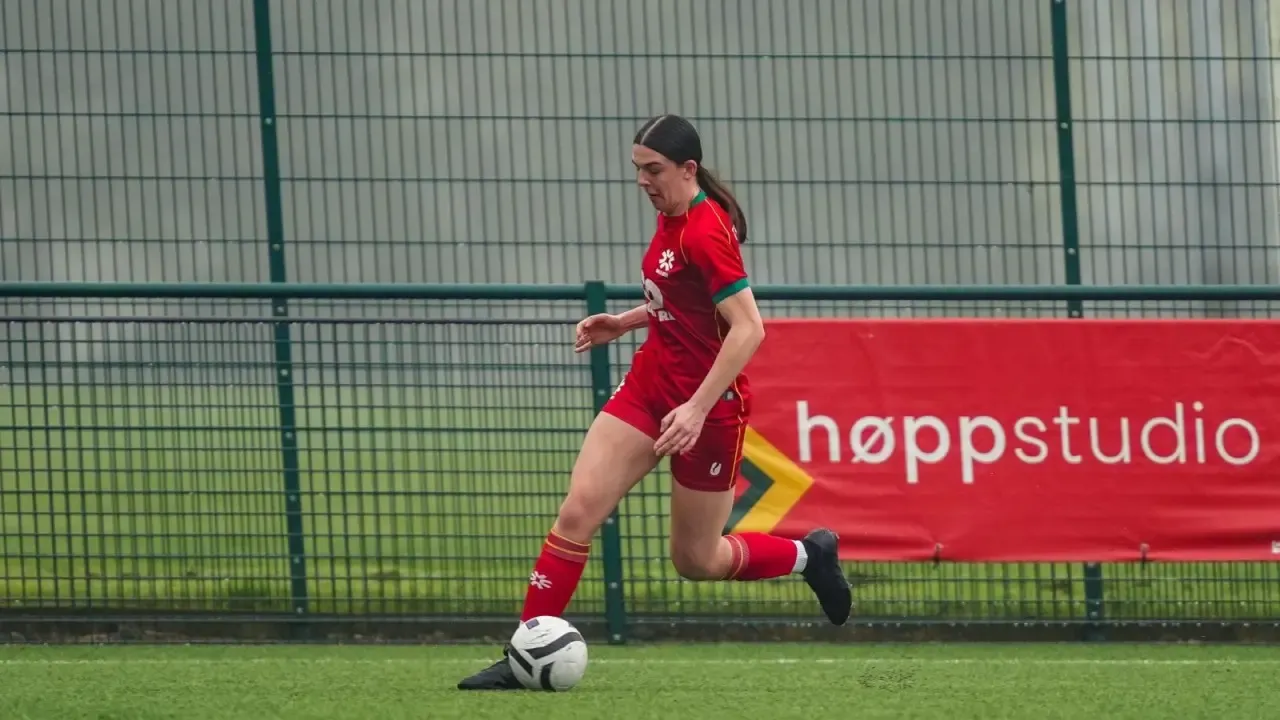
At høpp.studio , we've been the digital partner of Gwalia United, a women's football club based in Wales and competing in the English football pyramid, for three years. It's one of the decisions we're most proud of.
This isn't a piece about why sponsoring women's sport is 'good for your brand.' It's about why it matters to communities, to young girls, and to the kind of Wales we want to help build through our work with the Football Association of Wales.
The numbers tell a story, but it's not the whole story
Women's football is growing at a pace that would have seemed extraordinary a decade ago.
Since 2020, the number of women and girls playing football in the UK has increased by 56 percent. There are now 845,000 girls playing regularly in England alone. The day after England's Euro 2024 final, online searches for female football opportunities jumped by 196 percent overnight.
The WSL, once a niche competition, has seen average match attendance triple in just three seasons. Women's football is now the most commercially valuable women's sport on the planet, generating over €500 million in global revenue annually.
"Football is a powerful economic and social engine for Wales; from the grassroots game to our national teams, it supports jobs, drives tourism, and builds pride in communities." — Noel Mooney, CEO, Football Association of Wales
That quote, from the FAW CEO speaking at the launch of Business News Wales's new Sport Business platform, reflects something important. Sport isn't just entertainment, it's infrastructure. It's community architecture. And women's football, right now, is building something genuinely significant.
Business News Wales recently launched a dedicated Sport Business section, recognising that sport contributes over £1 billion annually to Wales's GDP, yet its economic contribution remains underrepresented in business and policy conversations. That's starting to change.
What happens to a girl who plays football
Statistics about attendance and revenue matter. But here's what we think about more: what happens to a girl who grows up watching women play football at a senior level, women who look like her, who came from places like hers, and then picks up a ball herself.
Research from the Women's Sports Foundation shows that girls who participate in sport report self-esteem levels 1.5 times higher than those who don't. They experience measurably lower rates of anxiety and depression. They are less likely to drop out of education and more likely to enter leadership roles in their careers.
The research is stark: 80 percent of female executives at Fortune 500 companies identified themselves as former athletes. The path to leadership, the data keeps suggesting, runs through sport.
Girls who play sport develop something that no classroom or workplace training programme can fully replicate: the experience of competing, failing, regrouping, and trying again, with others who depend on them.
Team sport builds what psychologists call 'prosocial behaviours' - empathy, communication, the ability to hold yourself accountable to a group. For young girls navigating adolescence, these aren't soft skills. They're survival skills, and lifelong assets.
And critically, girls need to see women playing at a senior level to believe the game is for them. Representation in sport works the same way it works everywhere else. Visibility creates permission. Permission creates participation.
Gwalia United and what three years has taught us
Gwalia United play in Wales, train in Wales, and are building something real in Welsh women's football. As their digital partner, we've supported their online presence, their content, and their ability to tell their story.
What we didn't fully anticipate when we began this partnership was what we'd learn in return.
We build digital products for sport: flyt, our fan engagement platform; løft, our sports learning management system; and kennsla, a mentoring platform, launching this year. Everything we do is shaped by understanding how communities form around sport, how athletes learn and develop, and how clubs build relationships with their people.
Being a partner to a grassroots women's club, helps keep us grounded in exactly that reality. Being present in it makes us better at what we do.
The most valuable thing a business can do through sport isn't put its logo somewhere prominent. It's to genuinely understand the community it wants to serve.
There's also something worth saying about longevity. Three years matters. Trust in sport is built over time. A one-season deal tells a club you're interested in their audience. Three seasons tells them you're invested in their future.
The opportunity for your business?
Business News Wales's Sport Business platform, launched this year in partnership with the FAW, WRU, Glamorgan Cricket and Cardiff City FC Community Foundation, has put the relationship between Welsh business and Welsh sport squarely on the agenda. That's an important moment.
In Wales alone, sport contributes more than £1 billion to our economy annually. It employs people, generates tourism, builds community cohesion, and increasingly it creates pipelines for talent into leadership and the workforce. It deserves to be treated as the strategic economic asset it is.
For businesses considering how they engage with sport, women's sport in particular represents a genuine opportunity, not because it's cheaper (though the commercial entry points are currently more accessible), but because the growth trajectory is clear and the community connection is real.
Welsh women's football is growing. Clubs like Gwalia United are part of that story. And the businesses that show up now, not when it's the obvious thing to do, but when it still requires a decision, will be part of something that matters.
We don't talk about our Gwalia partnership often enough. This piece is partly an attempt to correct that.
We believe technology companies in sport have a responsibility to do more than build products. We work with grassroots clubs right up to National Federation. We build platforms that help sports organisations connect with their communities. We care about the ecosystem we operate in as much as the digital ecosystems we deliver.
Supporting Gwalia United isn't a marketing decision that happened to have values attached to it. It's a values decision that happens to be good for our business too.
That distinction matters to us.
That mission, written into our values from the very beginning in 2016 turns out to have been the blueprint all along.
The pivot into sport, accelerated through the last six years, wasn't a strategic pivot as much as a natural landing. Sport is one of the few spaces where community and brand coexist in the most emotionally charged, loyally contested way imaginable. Our values - being agile and targeted, collaborative, conscientious, provocative, and our relentless drive toward what we call beautiful excellence - mapped perfectly onto what sport actually needs from its digital partners.
Related product
Explore flyte →